

Lighting the Way Home
One of the questions we always ask visiting school parties is ‘What is a lightship’. Most of them get the answer right, or partly right; that a lightship is a floating lighthouse that warns ships at sea of hazards. Partly right? Yes, because they do much more than that. The light of each lightship (and lighthouse) has a unique flash pattern. The sequence of flashes of lights, and the pauses in between, tell the passing mariner where they are. They’re an aid to navigation as well.

The original plans of LV50 and her light
Imagine you’re at sea, lost, you don’t know exactly where you are. You see a distant flashing light. If you look at a nautical chart (map) and you’ll find all the flash pattern codes for lights on the part of the coast where you are. Take a compass bearing on the light and you know you’re somewhere along the line of that bearing. See another light, or other landmark, and you’ve got an exact fix on your position.
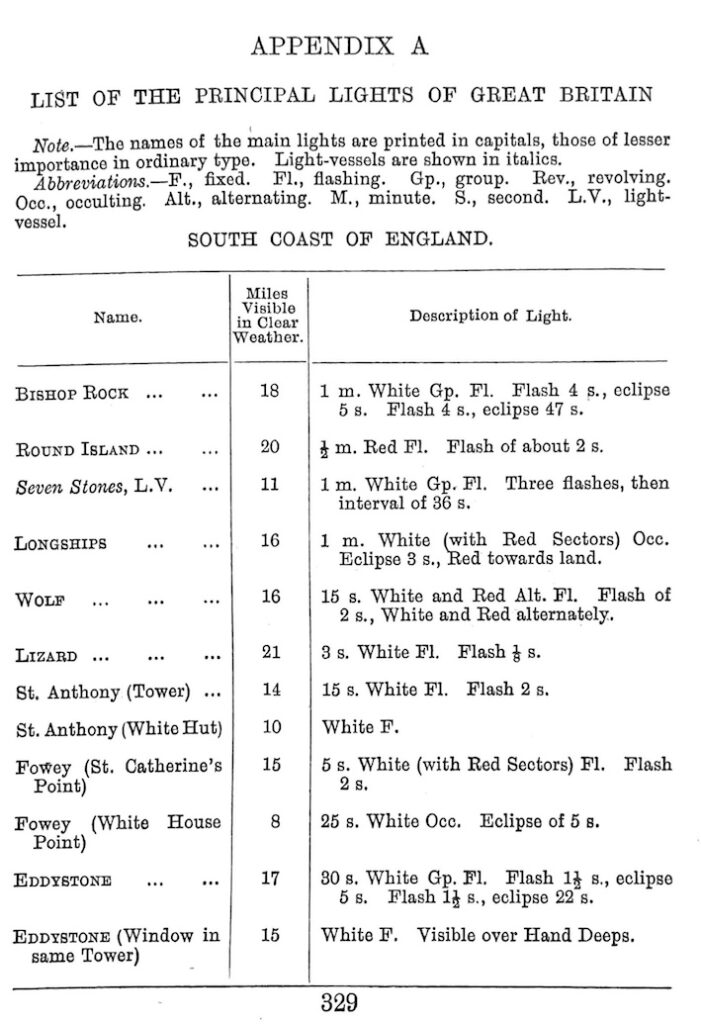
List of the principal lights, including description of the light. See how complicated some of the flash patterns are, some even in colour.
So how did they get such a bright light shining out over the sea and how did they get it to flash?
One of the first lighthouses was designed by Henry Winstanley for the Eddystone lighthouse in 1699. This light used 60 candles. Candles created a lot of black soot which dimmed the light. In 1784 Amie Argand, a Swiss chemist, discovered that if you placed a clear glass cylinder around the flame it produced a clean, smokeless flame about 10 times brighter than a single candle. Unfortunately, at this time they used oil from whales as it burnt cleaner than other oils.
These technological improvement increased the light output a lot but the light from the lamp went equally in all directions, it wasn’t focused into a beam. The next technological invention was made by Robert Stevenson in the 1780’s. He focused the beam of light using a parabolic reflector made from silver plated copper hammered into shape. This, combined with the argan lamp, produced a light about 240 times brighter than a candle in a focused beam that could shine out over the sea. So how about making it flash?
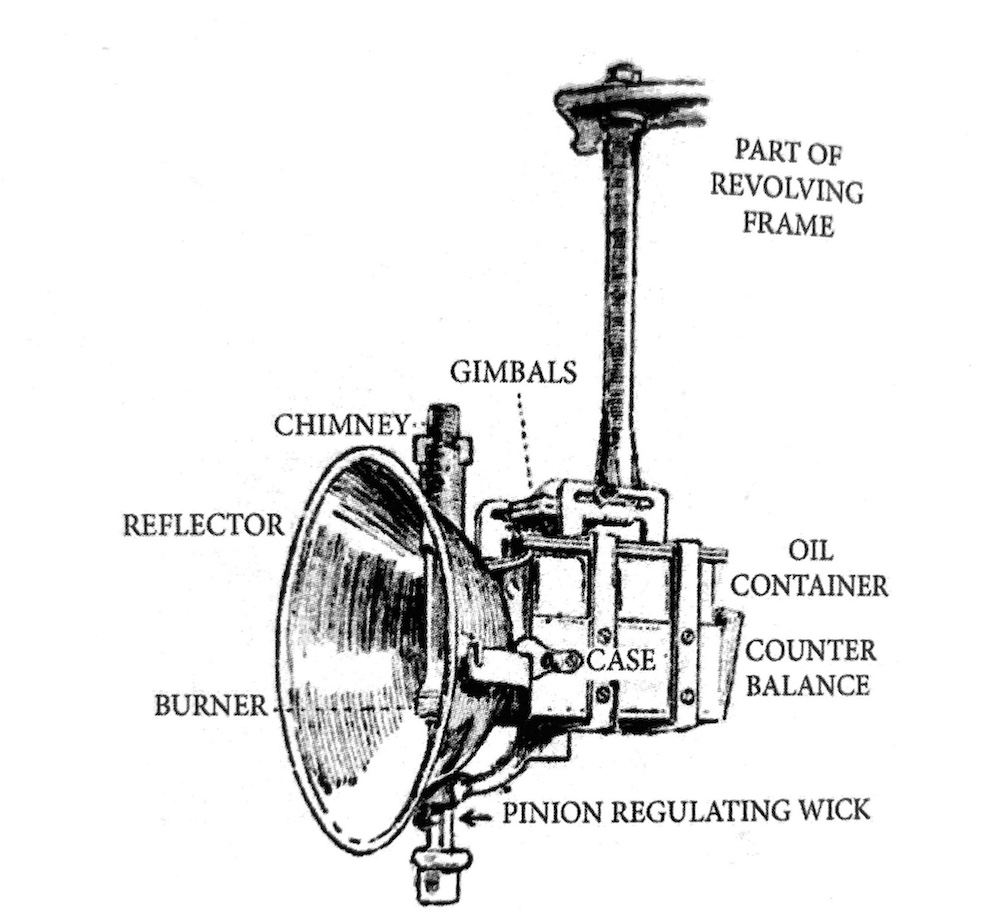
Argan light and parabolic reflectors. Source: Lane & Augustus Lightships
Well, the light didn’t actually flash. The steadily burning lamp with their reflectors were mounted on a frame that rotates as the light shines. This gives the impression of flashing but really the beam shines out, sweeping around over the sea. The rotating light is then enclosed in a waterproof cover which has windows. The frame that the sets of lamps and reflectors are mounted on can be adjusted to control the apparent flash pattern so that the unique pattern can be programmed in but easily changed when the lightship changes location.

A lightship lantern being tested at the manufacturers factory Source: Chance Brothers
All these technological achievements were made without electricity or steam power. What made the light rotate? The answer is clockwork. There was a large lead weight inside the mast that was wound up high and then allowed to slowly drop down, rotating the light through a series of cogs. Not too dissimilar from a grandfather clock except that you needed to wind it up every 30 minutes.
The focused light shining out in a steady beam, rotating to give the impression of flashing, visible over 10 miles away (on a clear night) wasn’t the only technological miracle. There was also the foghorn, but that’s another story.
If you’re interested in lightships there a lot more information on our website www.friendsoflv50.org.uk. If you prefer your information in a book why not try Anthony Lane and Martin Augustus’s new book, ‘Lightships Their Design, Development and Diversity’. Available from the publishers at https://www.amberley-books.com/lightships.html (you’ll also find it on Amazon).
Please leave a comment HERE